

NEET Physics Resonance MCQ Question
Consider a circuit diagram depicting a series RLC circuit used for tuning a radio. The circuit includes a resistor (R), inductor (L), and variable capacitor (C) connected to an AC source. If the circuit is in resonance with a radio signal frequency, which of the following statements is true about the voltages across the inductor and capacitor?
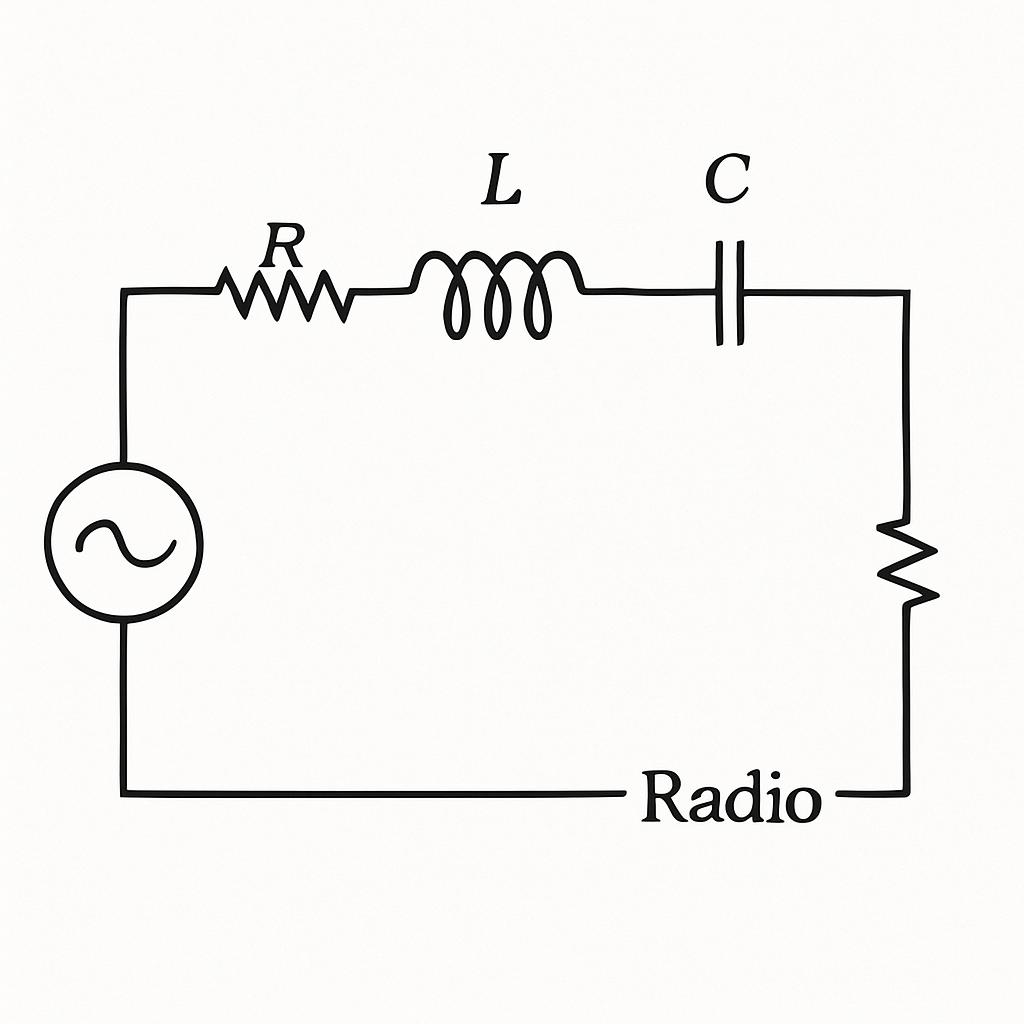
The voltages across L and C cancel each other out because they are out of phase.
The voltages across L and C add up to double the source voltage.
The voltage across L is zero and across C is maximum.
The voltages across L and C are equal and in phase.
Correct Answer
Detailed Explanation
In resonance, the voltages across the inductor and capacitor cancel each other out because they are out of phase, allowing the total voltage to appear across the resistor.
Found an issue with this question?
Related Questions
More from Resonance
More from
In an AC circuit, the power factor is given by cosφ, where φ is the phase difference between voltage and current. If the rms voltage is 220 V, rms cur...
What is the term used to describe the phase relationship factor between voltage and current in an AC circuit?
In the context of an LC circuit, which of the following statements about energy oscillation and conservation is correct?