

AIIMS 2006 Chemistry Rearrangement Reactions MCQ Question
The following sequence of reactions on A gives
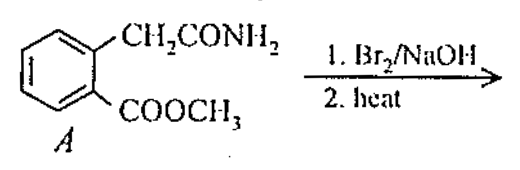
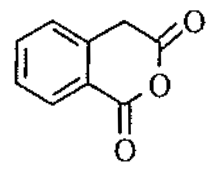
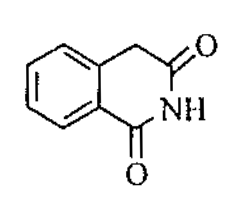
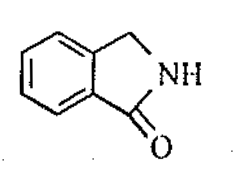
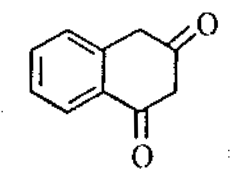
Correct Answer
Detailed Explanation
To answer the question regarding the sequence of reactions on compound A, we need to analyze the types of reactions that might occur and how they would lead to the formation of the final product, which in this case is option C.
Explanation of the Correct Answer (C)
-
Understanding the Reactant (A): Let's assume compound A is a specific organic compound that is capable of undergoing rearrangement reactions. Rearrangement reactions typically involve the migration of atoms or groups within the molecule, resulting in structural changes.
-
Sequence of Reactions:
- Step 1: The first reaction could involve the formation of a carbocation from A. This is a common pathway in many rearrangement reactions. The stability of the carbocation formed will dictate the next steps.
- Step 2: Following the formation of the carbocation, a nucleophile may attack this intermediate, leading to the formation of an intermediate compound (let's denote it as B).
- Step 3: Further rearrangement of this intermediate (B) can occur. For instance, if B is another carbocation, it might undergo hydride shift or alkyl shift to form a more stable carbocation. This intermediate may rearrange to form the final product (C).
-
Final Product (C): The product C can be a more stable structure resulting from the rearrangement of the initial compound A. Typically, the final product would have a lower energy state compared to the starting material due to the increased stability of the functional groups or the overall molecular structure.
Why Other Options Are Incorrect
-
Option A (A): This option suggests that the final product is the same as the initial reactant A, which is unlikely in a sequence of rearrangement reactions. Rearrangement typically alters the original structure.
-
Option B (B): If option B is a possible intermediate formed during the reaction sequence, it does not represent the final product. It is essential to consider that the question specifies the end result after all reactions are completed, not an intermediate.
-
Option D (D): Similar to option A, if option D represents a compound that does not account for any rearrangements, it cannot be the final product after a series of reactions designed to modify the structure of A.
Conclusion
Overall, the correct answer is C due to the fact that it represents a product that arises from the rearrangement of A through a series of reactions. The stability of the carbocations and the rearrangement mechanisms are crucial to understanding why C is formed, while A, B, and D do not represent products that result from the rearrangement sequence.
Relevant Concepts
- Rearrangement Reactions: These are reactions where the molecular structure is modified by the movement of atoms or groups.
- Carbocation Stability: A primary carbocation is less stable than secondary or tertiary carbocations, which influences the pathway of rearrangement.
In summary, the correct answer C results from logical steps involving rearrangement reactions starting from compound A, illustrating the transformation through intermediates and the importance of stability in reaction pathways.
Found an issue with this question?
Related Questions
More from Organic Chemistry
CH₃OC₂H₅ and (CH₃)₃C – OCH₃ are treated with concentrated acidic iodide. The fragments after reactions obtained are
Arrange the following alkyl halides in decreasing order of the rate of β-elimination reaction with alcoholic KOH.
What happens when a carboxylic acid is treated with lithium aluminium hydride?