

AIIMS 2018 Chemistry Reaction Mechanisms MCQ Question
The rate of SN₁ reaction is directly proportional to the stability of carbocation which depends upon +I, +M, H effect. The carbocations are shown below.
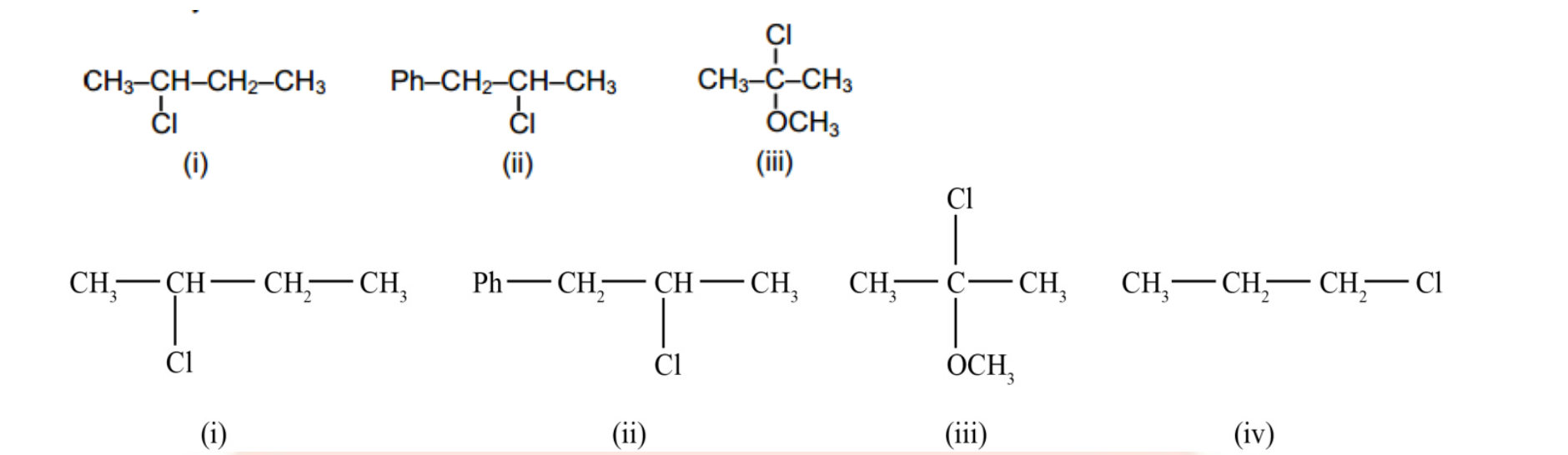
i > ii > iii > iv
ii > i > iii > iv
iii > ii > i > iv
iv > iii > ii > i
Correct Answer
Detailed Explanation
Option C is correct because it represents the most stable carbocation, which is typically a tertiary carbocation. Tertiary carbocations benefit from both hyperconjugation and +I (inductive) effects from surrounding alkyl groups, enhancing their stability and thus increasing the rate of the SN₁ reaction.
In contrast, options A (primary carbocation) and B (secondary carbocation) are less stable due to fewer alkyl groups providing stabilizing effects. Option D may represent a resonance-stabilized carbocation, but if it is not as stable as the tertiary carbocation in option C, it will not favor the SN₁ pathway as effectively. Understanding carbocation stability is crucial for predicting reaction mechanisms in organic chemistry.
Found an issue with this question?
Related Questions
More from Organic Chemistry
CH₃OC₂H₅ and (CH₃)₃C – OCH₃ are treated with concentrated acidic iodide. The fragments after reactions obtained are
Arrange the following alkyl halides in decreasing order of the rate of β-elimination reaction with alcoholic KOH.
What happens when a carboxylic acid is treated with lithium aluminium hydride?