

AIIMS 2018 Chemistry Nucleophilic Substitution MCQ Question
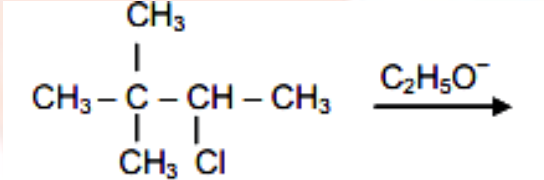
Major product of following reaction:
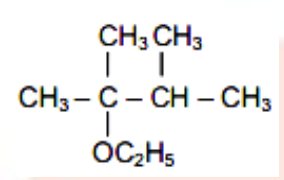
Correct Answer
Detailed Explanation
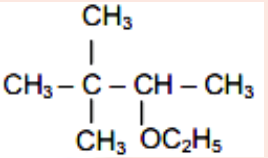
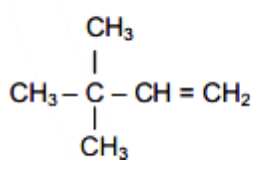
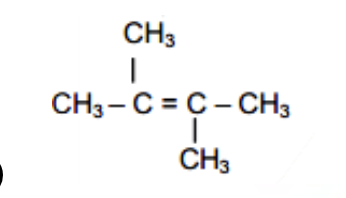
C₂H₅O⁻, as a stronger nucleophile than Cl⁻, effectively replaces the chlorine atom in the reaction, leading to the formation of an ether or alcohol depending on the substrate. This nucleophilic substitution occurs due to the stability of the ethoxide ion (C₂H₅O⁻), which can readily attack the electrophilic carbon bonded to Cl. Other options may represent products formed under different conditions or with weaker nucleophiles, failing to demonstrate the preferred pathway of substitution by a stronger nucleophile like C₂H₅O⁻. Understanding the reactivity of nucleophiles is crucial in predicting the outcome of substitution reactions in organic chemistry.
Found an issue with this question?
Related Questions
More from Organic Chemistry
CH₃OC₂H₅ and (CH₃)₃C – OCH₃ are treated with concentrated acidic iodide. The fragments after reactions obtained are
Arrange the following alkyl halides in decreasing order of the rate of β-elimination reaction with alcoholic KOH.
What happens when a carboxylic acid is treated with lithium aluminium hydride?