

AIIMS 2017 Chemistry Grignard Reagents MCQ Question
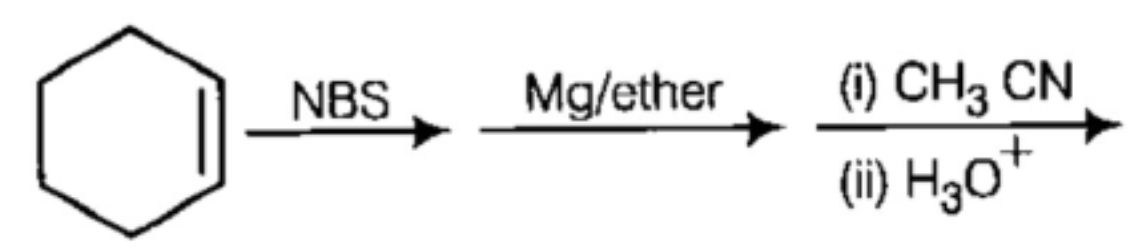
Consider the following equation
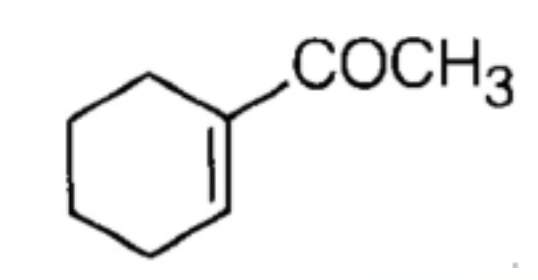
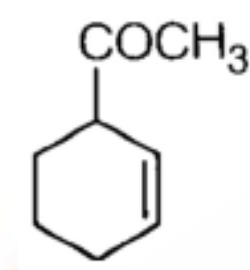
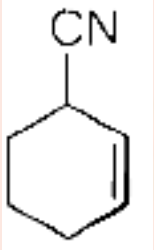
The end product for the given sequence of reaction is
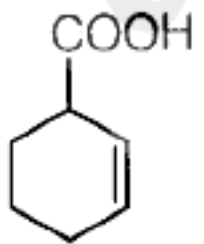
Correct Answer
Detailed Explanation
The reaction of cyclohexene with N-BromoSuccinimide (NBS) leads to bromination at the allylic position, forming an allylic bromide. When this allylic bromide is treated with magnesium, a Grignard reagent is generated, which then reacts with acetonitrile (CH₃CN) to form an intermediate that undergoes hydrolysis to yield 1-cyclohexyl-2-butanone (ketone). Other options are incorrect as they likely do not represent the correct structure or functional groups resulting from the described reaction sequence. Understanding the mechanism of allylic bromination and Grignard reagent formation is crucial for predicting the final product in such organic transformations.
Found an issue with this question?
Related Questions
More from Organic Chemistry
CH₃OC₂H₅ and (CH₃)₃C – OCH₃ are treated with concentrated acidic iodide. The fragments after reactions obtained are
Arrange the following alkyl halides in decreasing order of the rate of β-elimination reaction with alcoholic KOH.
What happens when a carboxylic acid is treated with lithium aluminium hydride?