

RE-NEET 2026 Physics Linear Momentum in Circular Motion MCQ Question
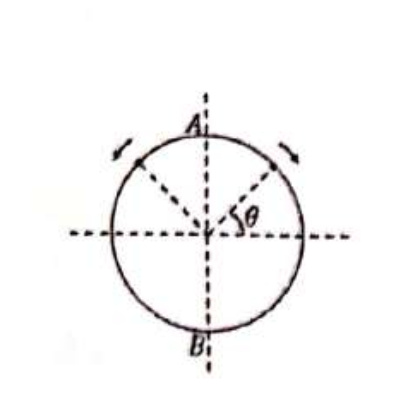
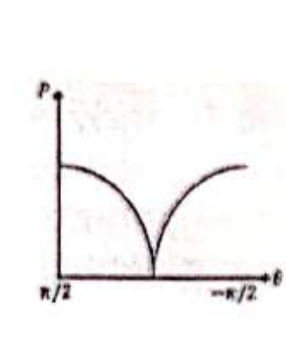
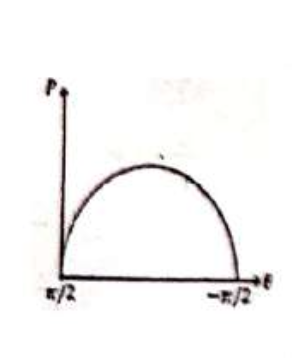
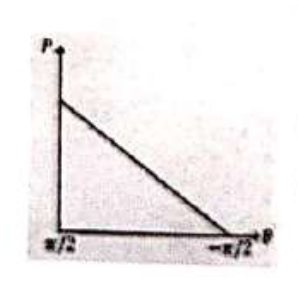
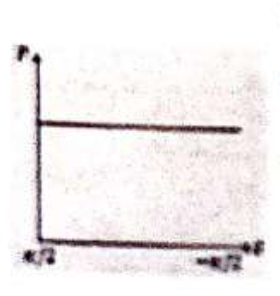
A frictionless circular wire of unit radius is fixed on the horizontal plane. Two point particles of unit mass start moving simultaneously from point A (θ = π/2) with identical uniform angular speeds in opposite directions, and meet again at point B (θ = −π/2). During this time, which of the following figures schematically represent the magnitude of the total linear momentum P of the system, as a function of θ?
Correct Answer
Detailed Explanation
The total linear momentum of the system is determined by the vector sum of the momenta of the two particles. As they move in opposite directions on a circular path, their momenta will cancel each other out at certain angles, leading to a minimum total momentum when they are directly opposite each other (at ).
The correct graph (B) shows a minimum at and maximum values at , accurately reflecting this behavior.
Other options fail because they either suggest a linear relationship (D), constant momentum (E), or incorrect curvature (C) that does not match the cancellation of momenta as the particles move.
Found an issue with this question?
Related Questions
More from 2026
Arrange the following in the correct developmental sequence related to microsporogenesis:
Match List I with List II:
Choose the correct statements regarding cell organelles and their inclusions. A. The endomembrane system includes Golgi complex, endoplasmic reticulu...