

RE-NEET 2026 Physics Rutherford Scattering MCQ Question
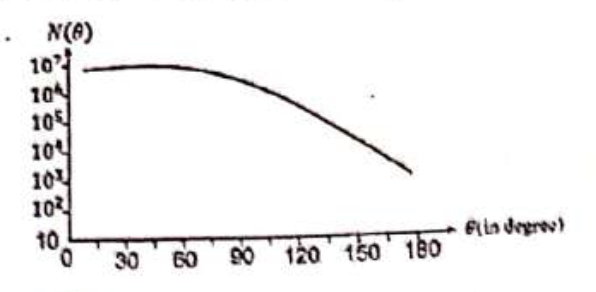
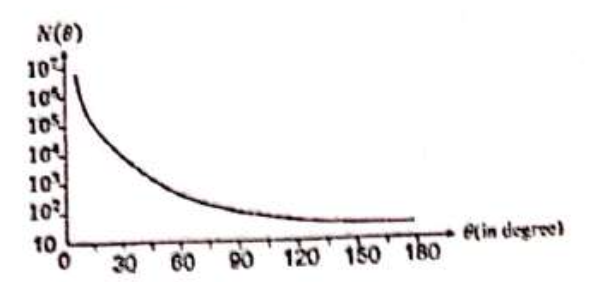
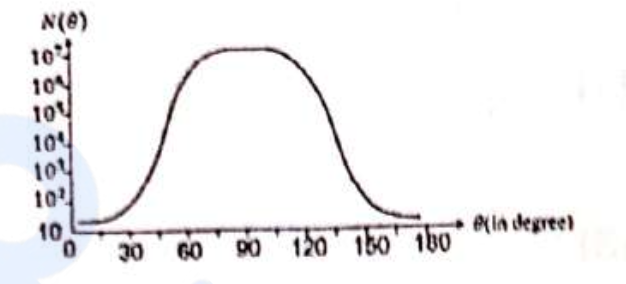
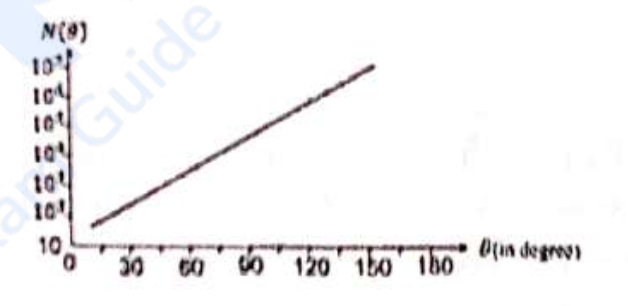
In Geiger-Marsden experiment, the number of scattered α-particles N(θ) is plotted as a function of scattering angle θ. Which of the following options represents the correct plot?
Correct Answer
Detailed Explanation
✅ Answer: B
📚 NCERT Topic: Structure of Atom Subtopic: Rutherford’s α-particle Scattering Experiment
🔍 Explanation
The number of α-particles scattered at angle follows Rutherford’s relation:
As increases, increases, so:
At small angles, many α-particles are scattered; at large angles, the number becomes very small.
Therefore, the graph should show a very steep decrease initially, followed by a long low tail → B.
❌ Why other options are wrong
- A ❌ Decrease is too gradual; it does not represent the strong dependence.
- C ❌ Shows a maximum at intermediate angle; Rutherford scattering does not behave this way.
- D ❌ Shows increasing , opposite to the relation.
📖 NCERT Line
“Most of the fast moving α-particles passed straight through the gold foil, with only a small fraction being deflected through large angles.”
⚡ QUICK REVISION
Small → many particles Large → very few particles → extremely few/back-scattered
🧠 Graph trick: Steep fall → long tail = Rutherford scattering → B.
Found an issue with this question?
Related Questions
More from 2026
Arrange the following in the correct developmental sequence related to microsporogenesis:
Match List I with List II:
Choose the correct statements regarding cell organelles and their inclusions. A. The endomembrane system includes Golgi complex, endoplasmic reticulu...