

NEET 2026 Chemistry Oxidation Reactions MCQ Question
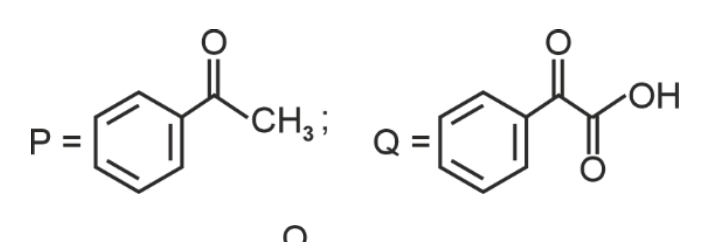
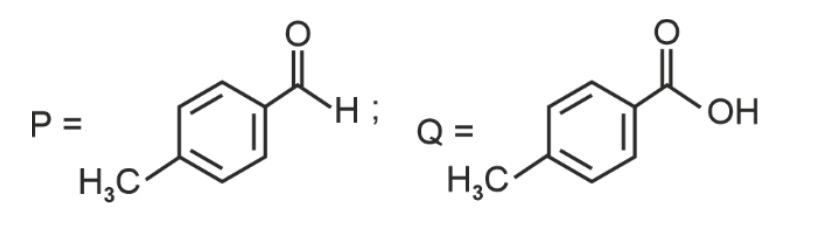
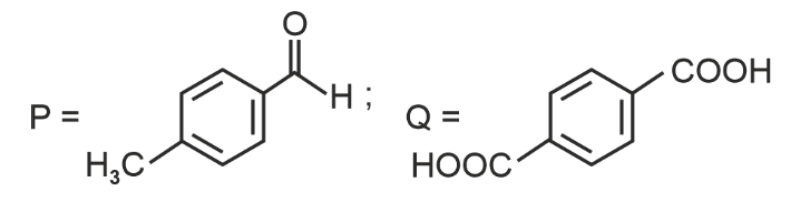
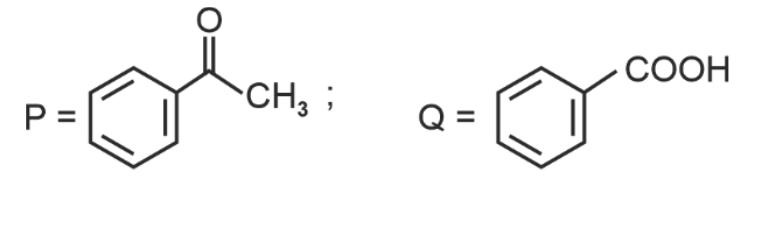
Compound P(C₆H₅O) gives a red orange precipitate with 2,⁴⁻DNP reagent and it does not reduce Fehling’s reagent. On drastic oxidation with chromic acid, P gives an aromatic product Q that produces effervescence on treating with aq. NaHCO₃. Compounds P and Q, respectively, are:
Correct Answer
Detailed Explanation
Topic: Aldehydes & Ketones → Oxidation Reactions Difficulty: 🟡 Medium
✅ Ans: D
P = Acetophenone
- Gives 2,4-DNP precipitate → confirms carbonyl group.
- Does not reduce Fehling’s reagent → P is a ketone, not an aldehyde.
- On drastic oxidation, the side chain is oxidised to –COOH:
So,
❌ Why others are wrong?
- A ❌ → oxidation product shown is incorrect.
- B ❌ → P is an aldehyde, which should reduce Fehling’s reagent.
- C ❌ → P is an aldehyde, so it should give a positive Fehling’s test.
📌 NCERT: Ketones generally do not reduce Fehling’s solution, whereas aldehydes do.
🧠 NEET Trick: 2,4-DNP + Fehling’s negative → Ketone → aromatic methyl ketone on strong oxidation → benzoic acid.
Found an issue with this question?
Related Questions
More from 2026
Arrange the following in the correct developmental sequence related to microsporogenesis:
Match List I with List II:
Choose the correct statements regarding cell organelles and their inclusions. A. The endomembrane system includes Golgi complex, endoplasmic reticulu...