

NEET Chemistry Substitution Reactions MCQ Question
Consider a diagram representing the electrophilic substitution reaction of benzene where the benzene ring is shown interacting with an electrophile in the presence of a catalyst. Which step in the mechanism involves the formation of a carbocation intermediate?
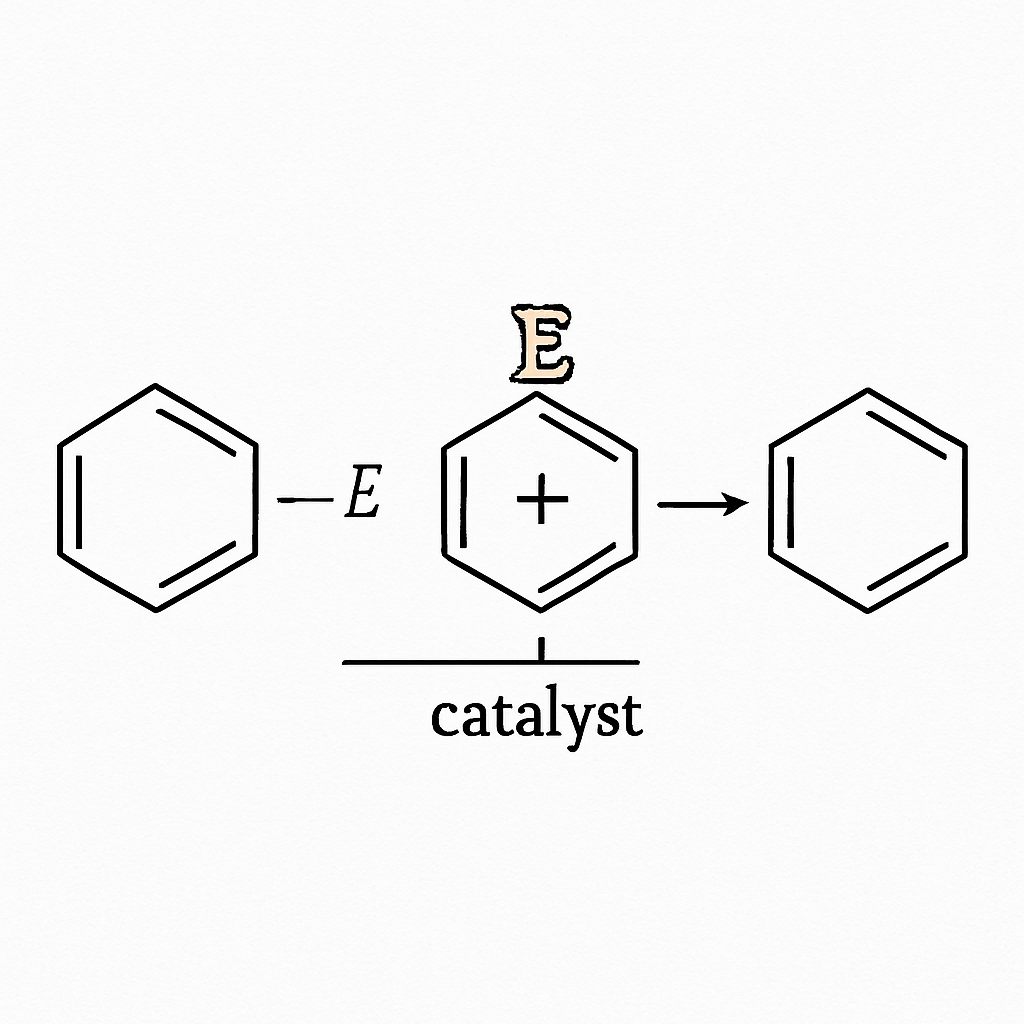
Generation of the electrophile
Formation of a carbocation intermediate
Removal of proton from the carbocation
Dissociation of the benzene ring
Correct Answer
Detailed Explanation
In the mechanism of electrophilic substitution reactions of benzene, the formation of a carbocation intermediate is the second step, as described in the NCERT context.
Found an issue with this question?
Related Questions
More from Substitution Reactions
More from
CH₃—C≡CH 40% H₂SO₄, 1% HgSO₄ → A Isomerisation → CH₃—C—CH₃
Match Column-I with Column-II. Column-I Column-II (a) Alkane (i) Triple bond (b) Alkyne (ii) Addition reactions (c) Paraffins (iii...
The products for the following reactions are (i) CH₃−C−CH₂−CH₃ + alc. KOH → X (ii) CH₃−CH=CH−CH₂ + O₃ → Y + X