

NEET Chemistry Substitution Reactions MCQ Question
Consider a diagram of benzene undergoing substitution reactions where electrophilic chlorination is illustrated. Which step in the mechanism involves the formation of a carbocation intermediate?
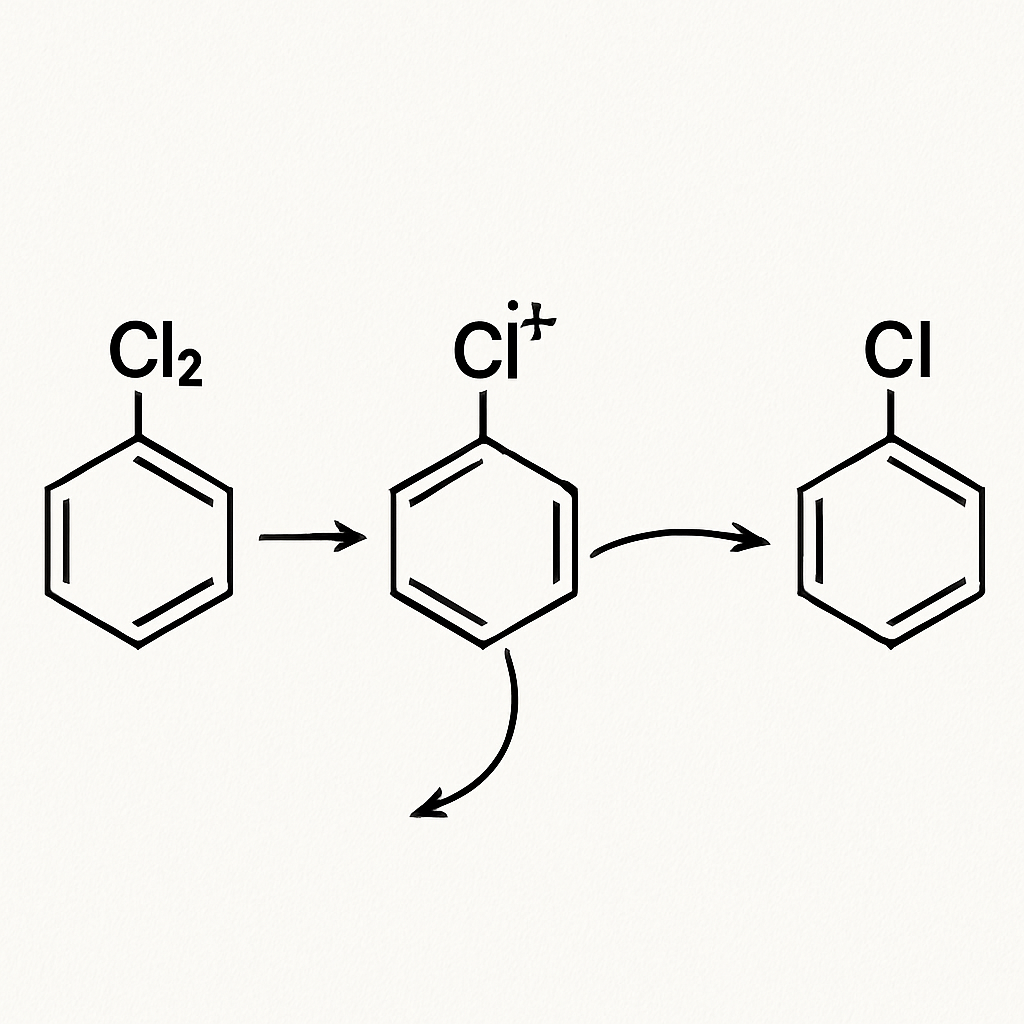
Generation of electrophile
Formation of carbocation intermediate
Removal of proton from the carbocation intermediate
Formation of hexachlorobenzene
Correct Answer
Detailed Explanation
The mechanism of electrophilic substitution reactions, such as chlorination, involves the formation of a carbocation intermediate as a crucial step.
Found an issue with this question?
Related Questions
More from Substitution Reactions
More from
CH₃—C≡CH 40% H₂SO₄, 1% HgSO₄ → A Isomerisation → CH₃—C—CH₃
Match Column-I with Column-II. Column-I Column-II (a) Alkane (i) Triple bond (b) Alkyne (ii) Addition reactions (c) Paraffins (iii...
The products for the following reactions are (i) CH₃−C−CH₂−CH₃ + alc. KOH → X (ii) CH₃−CH=CH−CH₂ + O₃ → Y + X