AIIMS 2006 Physics Bimetallic Strips MCQ Question
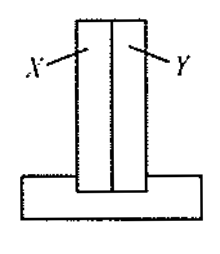
A bimetallic strip consists of metals X and Y. It is mounted rigidly at the base as shown. The metal X has a higher coefficient of expansion compared to that for metal Y. When the bimetallic strip is placed in a cold bath
it will bend towards the right
it will bend towards the left
it will not bend but shrink
it will neither bend nor shrink.
Correct Answer
Detailed Explanation
To understand the behavior of a bimetallic strip consisting of two metals, X and Y, when placed in a cold bath, we need to consider the concept of thermal expansion.
Concept of Thermal Expansion: When materials are heated, they typically expand, and when cooled, they contract. The degree of expansion or contraction of a material is quantified by its coefficient of linear expansion, denoted as . The linear expansion can be represented by the formula:
where:
- is the change in length,
- is the original length,
- is the coefficient of linear expansion,
- is the change in temperature.
In our case, metal X has a higher coefficient of expansion than metal Y, .
Explanation of the Correct Answer (B - it will bend towards the left)
-
Behavior in Cold Bath: When the bimetallic strip is placed in a cold bath, both metals will contract. However, because metal X has a higher coefficient of expansion, it will contract more than metal Y for the same temperature change.
-
Resulting Bending: Since metal X (the one with higher ) contracts more, it will pull away from metal Y. As a result, the strip will bend towards metal Y, which is on the left side if we assume the strip is oriented horizontally. Thus, the correct answer is that the bimetallic strip will bend towards the left.
Clarification of Incorrect Options:
-
Option A (it will bend towards the right): This option is incorrect because if metal X contracts more, it will not push or bend towards the right. Instead, it pulls away from metal Y, causing a bend towards the left.
-
Option C (it will not bend but shrink): This is misleading. While the entire strip will indeed shrink in length due to contraction, the differential contraction between the two metals causes bending. Thus, the strip does bend.
-
Option D (it will neither bend nor shrink): This option is incorrect because both metals will contract (shrink) when placed in a cold bath, and the difference in their contraction rates will cause bending.
Summary:
- The bimetallic strip bends towards the left because metal X, which has a higher coefficient of expansion, contracts more than metal Y when cooled, leading to differential contraction that causes bending.
The physical principle at play here is that different materials respond differently to temperature changes, and this differential behavior is what allows bimetallic strips to operate effectively in various applications, such as thermostats.
Found an issue with this question?