AIIMS 2006 Chemistry Electrophilic Aromatic Substitution MCQ Question
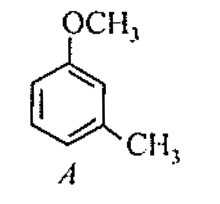
The major product obtained on the monobromination (with Br₂/FeBr₃) of the following compound A is
Correct Answer
Detailed Explanation
To understand the question regarding the monobromination of a compound (referred to as compound A) using bromine in the presence of iron(III) bromide (FeBr₃), we need to delve into the mechanism of electrophilic aromatic substitution (EAS), which is the fundamental reaction type involved here.
Explanation of the Correct Answer (B)
In the context of EAS, the reaction begins with the generation of a bromonium ion when bromine (Br₂) reacts with the aromatic compound in the presence of a catalyst (FeBr₃). The iron(III) bromide acts as a Lewis acid, facilitating the generation of the electrophile, Br⁺.
-
Generation of Electrophile: When Br₂ interacts with FeBr₃, it forms the bromonium ion:
-
Electrophilic Attack: The bromonium ion (Br⁺) can now attack the aromatic ring of compound A. The position where the electrophile attacks depends on the substituents already present on the ring. Substituents can be activating (electron-donating) or deactivating (electron-withdrawing), which influence the regioselectivity of the substitution.
If compound A has an electron-donating group (like -OH or -CH₃) in the ortho or para position relative to the site of bromination, the bromine will preferentially substitute at these positions due to increased electron density.
-
Formation of the Product: The product formed after the nucleophilic attack will be a brominated aromatic compound, specifically at the position dictated by the directing effects of substituents on compound A. If option B represents this major product after bromination, it indicates that the electrophilic attack occurred at the most favorable position on the aromatic ring.
Clarification on Incorrect Options
-
Option A (A): This option is incorrect as it suggests that no substitution occurred, which is unlikely in the presence of Br₂ and FeBr₃. Aromatic compounds generally undergo substitution when treated with electrophiles.
-
Option C (C): This could represent a position on the ring that is less favored due to the presence of deactivating substituents or steric hindrance, making it a minor product compared to the major product.
-
Option D (D): Similar to option C, this may also refer to an unfavorable substitution position or a less stable product that does not align with the directing effects of the substituents on the ring.
Summary of Concepts
-
Electrophilic Aromatic Substitution (EAS): A reaction where an electrophile replaces a hydrogen atom on an aromatic ring.
-
Regioselectivity: The position of substitution is influenced by the nature of substituents on the aromatic ring. Electron-donating groups direct substitution to the ortho and para positions, while electron-withdrawing groups direct it to the meta position.
Conclusion
The major product obtained from the monobromination of compound A is option B because it reflects the most stable and favorable substitution product based on the electronic effects of substituents on the aromatic ring. The other options do not represent the correct product due to either lack of substitution or substitution at less favorable positions. Thus, the correct answer is B.
Found an issue with this question?
Related Questions
More from Organic Chemistry
How many total carbons are found in palmitic acid?
In Lassaigne's extract of an organic compound, both nitrogen and sulphur are present, which gives blood red colour with Fe³⁺ due to the formation of -
How many geometrical isomers are possible in the following two alkenes? (i) CH₃−CH=CH−CH=CH−CH₃ (ii) CH₃−CH=CH−CH=CH−Cl