AIIMS2018Chemistry-Chemical Kinetics
AIIMS 2018 Chemistry Activation Energy MCQ Question
Type: MCQ-conceptual-Medium-Class 12
What is sequence of reagent use to convert following
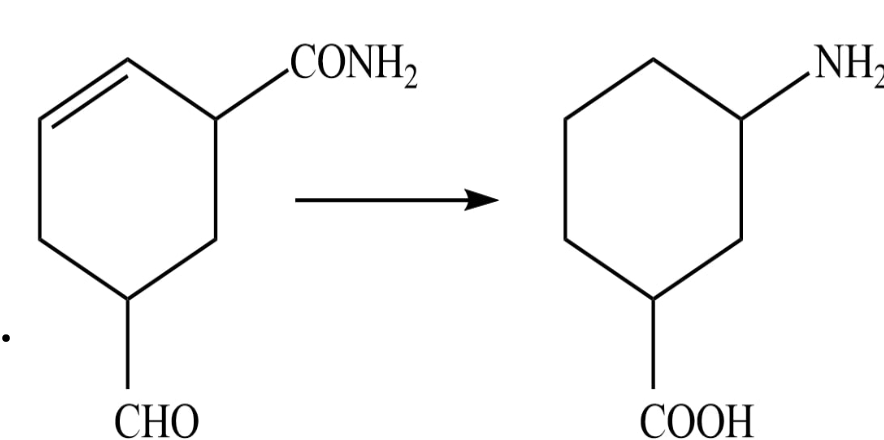
A
, ,
B
, ,
C
, ,
D
, ,
Correct Answer
Option B
Detailed Explanation
The equation derived from the ratio of reaction rates shows that the difference in activation energies, , can be rearranged to express as . This indicates that the activation energy is lower than by , confirming option B as correct. Other options are not applicable in this context, as they do not provide relevant information or calculations related to the activation energies or their relationship. Understanding the relationship between activation energy and reaction rates is crucial for grasping the principles of chemical kinetics.
Found an issue with this question?